
Mimosa Tree Seed Pod

Mimosa Tree Seed Pod

On the Edge
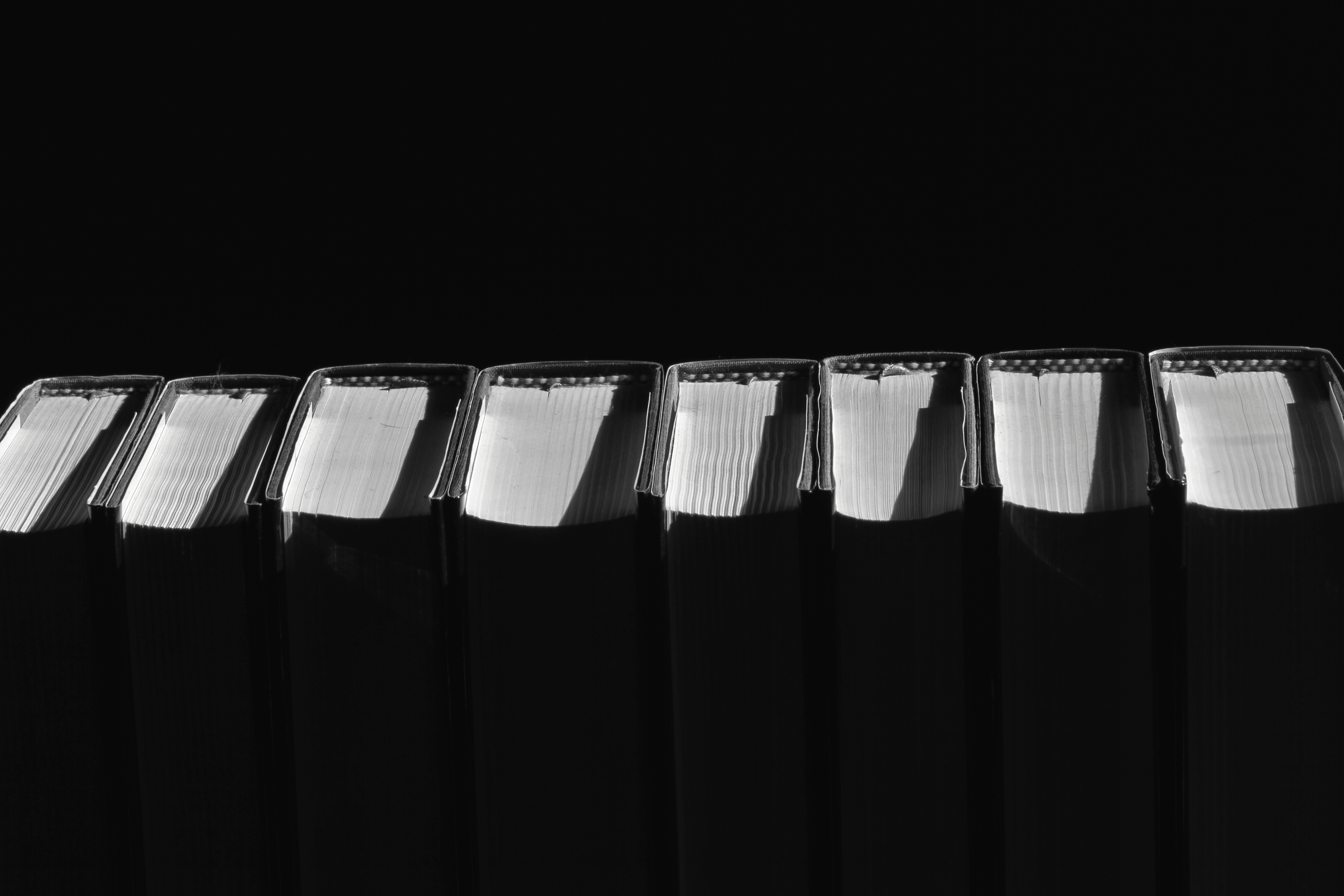
All In A Row

Asian Pears

A Certain Slant of Light
There’s a certain slant of light,
On winter afternoons,
That oppresses, like the weight
Of cathedral tunes.
Emily Dickinson
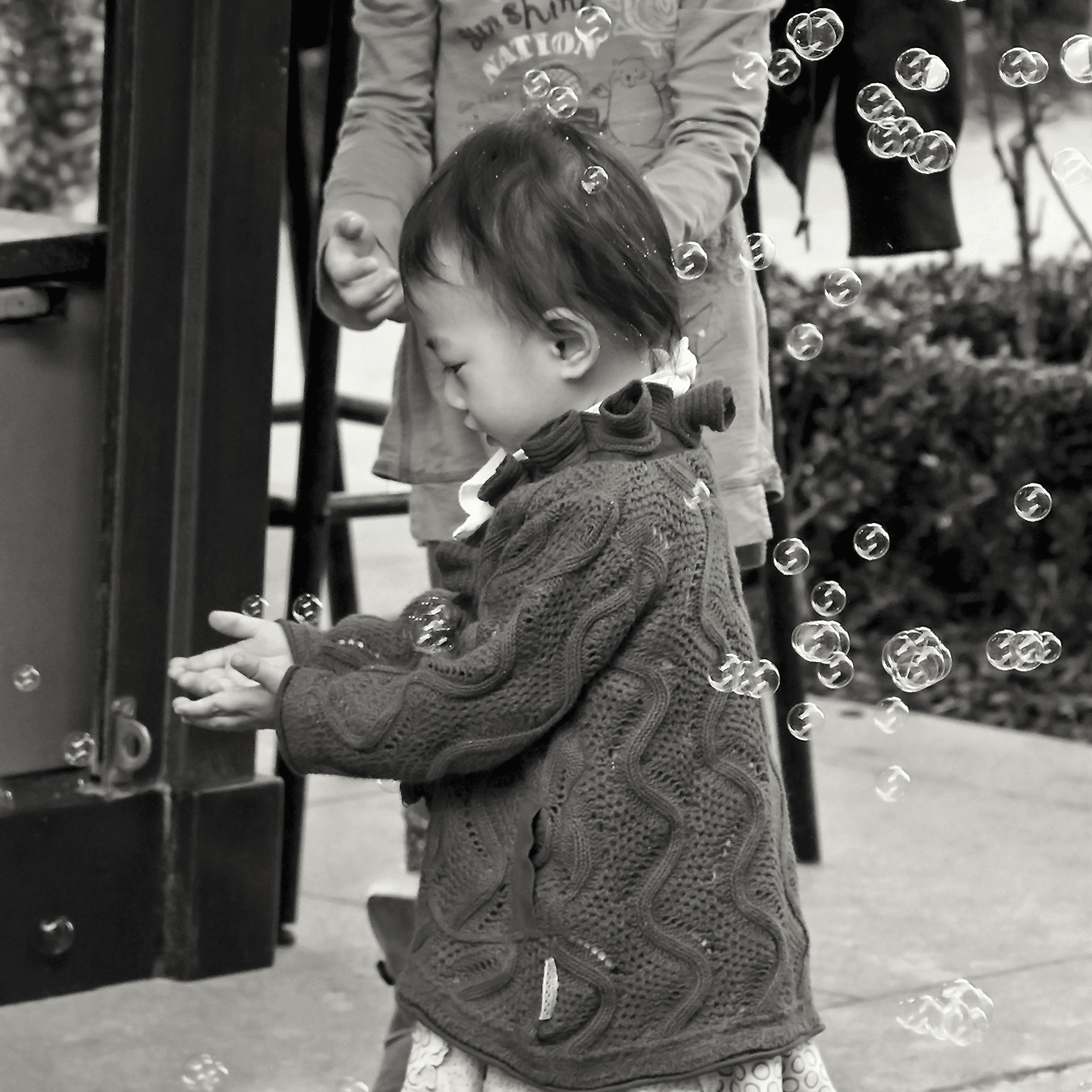
Little Bubbles

Vegetal Curves

Ample Make This Bed
Ample make this bed.
Make this bed with awe;
In it wait till judgment break
Excellent and fair.
Emily Dickinson
Eight years ago, we adopted two ex-racing greyhounds. Sophie, our first greyhound, was two-and-a-half, extremely shy, and spent her first couple months with us in a fetal position. She wouldn’t eat unless we left the room. She’d tremble violently when she was around people she didn’t know, but she slowly started getting used to us.

Sophie’s Paws
When we took her to a greyhound fundraiser, thinking she’d like being around other greyhounds, we met Charlotte, a year-and-a-half and just off the track with a broken foot. Charlotte’s exuberance was a sharp contrast with Sophie’s nearly pathological introversion, but Sophie felt an immediate bond with Charlotte, which she demonstrated by draping her neck over Charlotte’s neck in a neck-to-neck hug. We knew we had to adopt Charlotte. Six months later, her broken foot healed, Charlotte came to live with us and taught Sophie how to be a dog, how to play, how to be happy, how to enjoy naps on the sofa, and how to trust a few humans.

Charlotte in the Sunshine
When Sophie was lost 4 years ago (the gardeners left the gate to the yard open and we searched for Sophie for two agonizing weeks before we found her), Charlotte was always part of the effort to find her and happy when she was reunited with our family. They are a continuous, wonderful part of our lives beyond being frequent subjects for my photography. They are our greyhound girls, our hounds of the heart, our family.
On Christmas Eve, we found out Sophie has lymphoma, and a week later, the lab results from the lump on Charlotte’s head indicated she has sarcoma, after having had a malignant melanoma removed from her chest two months ago. Needless to say, we were reeling from this awful news. We’re getting them the treatments they need to fight this, combining both traditional protocols with alternative approaches. And then we take it a day at a time.
A friend with greyhounds who has been through this said to try and stay calm around the girls so they’re not stressing out like their humans. I try. I’m not sure I’m that good at compartmentalization, even though I understand what my friend means. But the hounds know. They follow me around the house, having to be in whatever room I’m in. So we continue going for walks, we continue showering them with love and treats.
Ultimately all time is borrowed time….for all of us, which the head may acknowledge, but never the heart.

Spoonbill
I always have mixed feelings when visiting the zoo. On one hand, I get to see an array of amazing species, but on the other hand, they are locked behind bars. In the aviary of the L.A. Zoo, I spotted this Spoonbill in an enclosure with a couple Sacred Ibises. He (she) was hunkered over, emitting an occasional wheeze. I stood next to him for quite a long time and then snapped his picture, hoping to capture some of his dignity, his beauty, his misery. His eyes were rivetting. I’ve been taking a home study course in bird languages from the ravens, the blue jays, the mockingbirds, the mourning doves, the sparrows, and finches in my back yard. I’m still a novice, but I do notice how much they say with their eyes, speaking paragraphs through blinks and dilations. If I could, I would have told this magnificent bird, “You are beautiful,” and “I’m sorry.”
I lament the fraught relationship between humans and animals. We’re not so different from one another, and yet we humans act as if an opposable thumb grants us an oppressive dominion over everything, having the right to do what we will with other living beings. Heartbreaking stories abound resulting from abuses of that dominion.

Meerkat
In the research I’m doing for my doctoral dissertation on the influences between early twentieth-century women photographers and women writers, I’ve spent some time reading and thinking about the notion of an ethics of seeing, a topic Susan Sontag introduces at the beginning of her seminal book, On Photography. She writes: “In teaching us a new visual code, photographs alter and enlarge our notions of what is worth looking at and what we have a right to observe. They are a grammar and, even more importantly, an ethics of seeing.” I certainly believe that aside from the prurient, exploitative, commercial value some photographs contain, a photograph can also be a witness, find beauty that’s overlooked, and stir our compassion for beings other than ourselves.
My own animal photos are inspired by the work of Isa Leshko. I am humbled and moved by the haunting beauty of her images of animals. In particular, her images of elderly animals are incredibly poignant and compelling. If there was ever a photographer practicing the ethics of seeing, she is. She has certainly changed the way I view other beings through my lens.
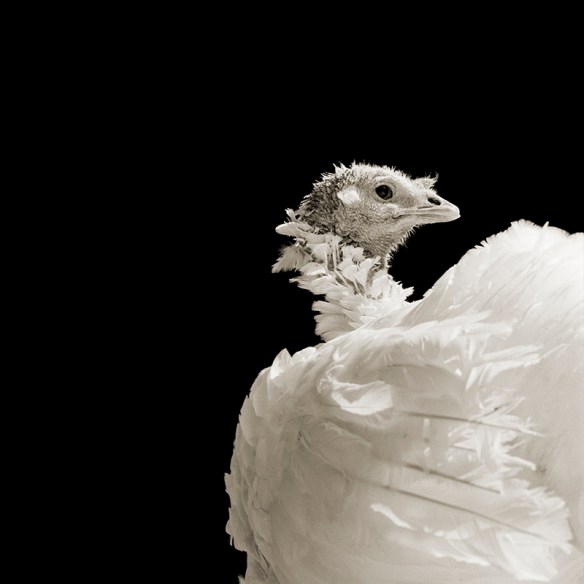
Isa Leshko’s Ash, Domestic White Turkey, Age 8 I
 Redzenradish Photography